Disciplined research, engineered for industrial deployment
Applied industrial R&D connects process research to manufacturable equipment — credibility through engineering validation, not claims.
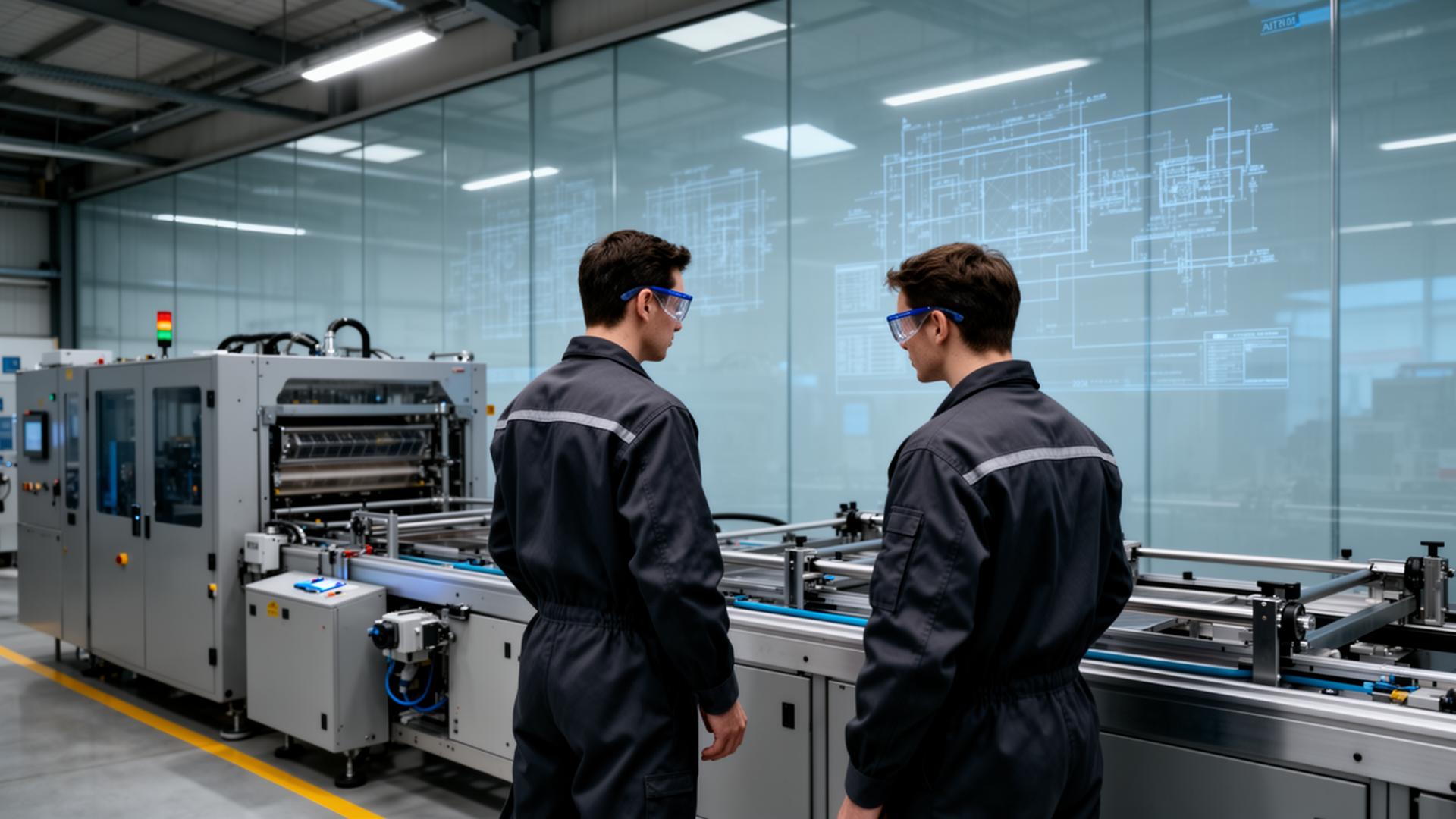
Engineering, validated on the line
An applied research program built for industrial outcomes
Our R&D program is structured around eight engineering tracks that connect applied research to manufacturable industrial equipment. Each track is staffed and resourced against defined deliverables — not open-ended exploration.
Applied Industrial R&D
Research scoped against real-world manufacturability, integration constraints, and industrial duty cycles — not isolated lab conditions.
Pilot-Scale Engineering
Stepwise progression from bench prototype to integrated pilot line, de-risking scale-up before commercial deployment.
Process Efficiency
Continuous improvement of cycle time, energy intensity per tonne, and material recovery yield across the line.
Equipment Durability
Design for uptime, tooling life, maintenance accessibility, and long-term industrial service life.
Operational Reliability
Reliability engineering — failure-mode analysis, redundancy strategy, and recovery-time targets engineered in from architecture.
Industrial Integration
Mechanical, electrical, and control integration validated under unified PLC/SCADA architecture before commercial release.
Environmental Management
Dust extraction, off-gas treatment, and emissions monitoring engineered as integral sub-systems.
Collaborative Innovation
Joint development with technology providers, manufacturing partners, and research institutions across Canada and internationally.
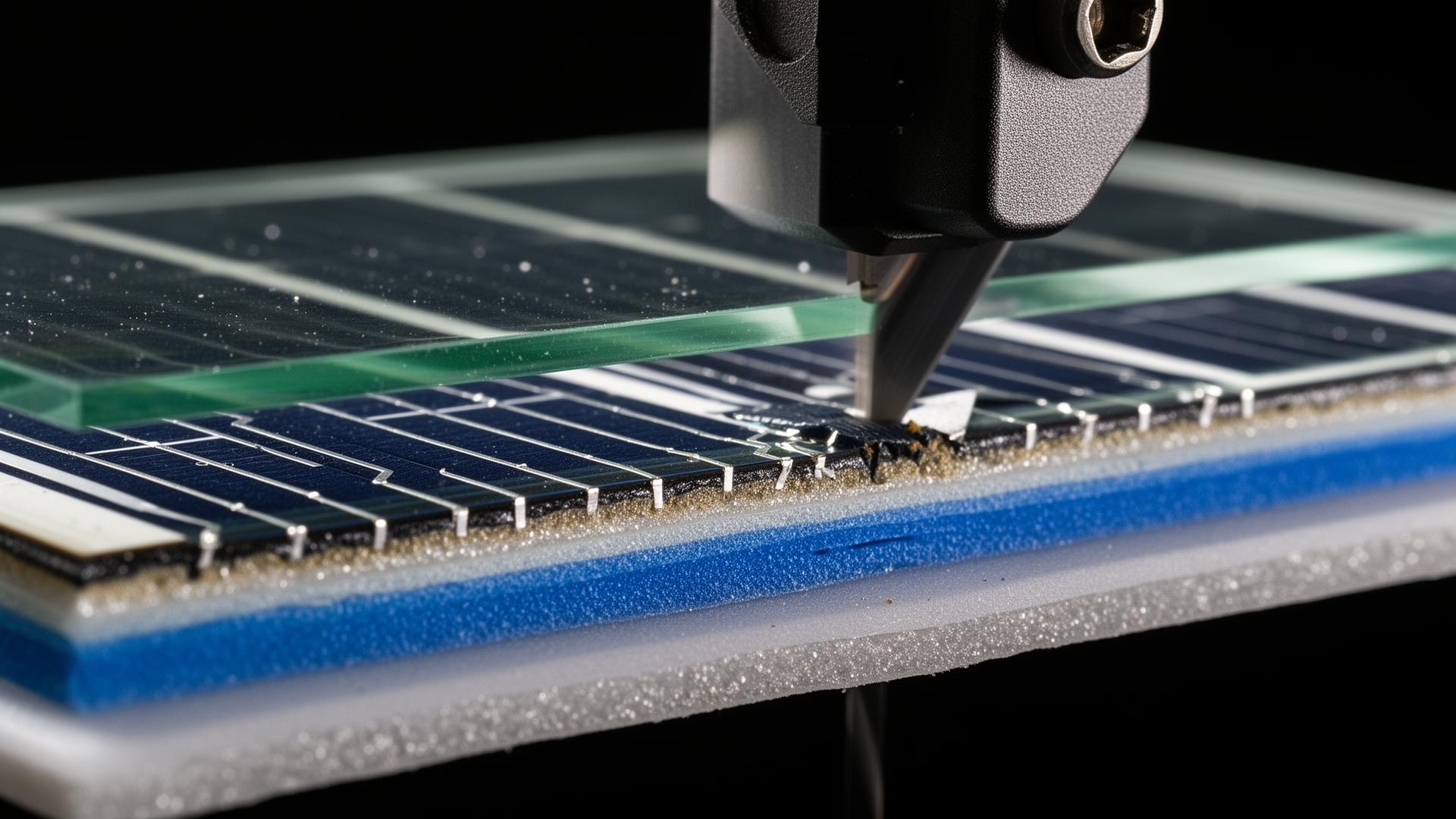
From bench prototype to instrumented pilot line
Each separation, recovery, and automation concept progresses through staged industrial prototyping — bench-scale proof of mechanism, sub-system prototyping, integrated pilot validation, and finally industrial release. Throughput, yield, and reliability are quantified at each stage before scale-up.
This staged pathway is what allows us to make engineering-stage claims with confidence: every commercialization-pathway statement is anchored in a defined validation step rather than aspiration.
The engineering capabilities behind the program
Process Analytics
Throughput, yield, and energy data unified across modules to drive continuous improvement and reporting.
Instrumentation Systems
Sensor architecture covering torque, vibration, vision, temperature, and material composition signals.
Engineering Simulation
Mechanical, kinematic, and process simulation to evaluate design changes before physical iteration.
Industrial Testing Methodology
Defined test protocols against throughput, recovery, durability, and safety targets for every module.
Collaborative Development
Joint engineering programs with industrial automation, robotics, and material-science partners.
Environmental Validation
Continuous emissions monitoring and material-flow accounting to support environmental reporting.
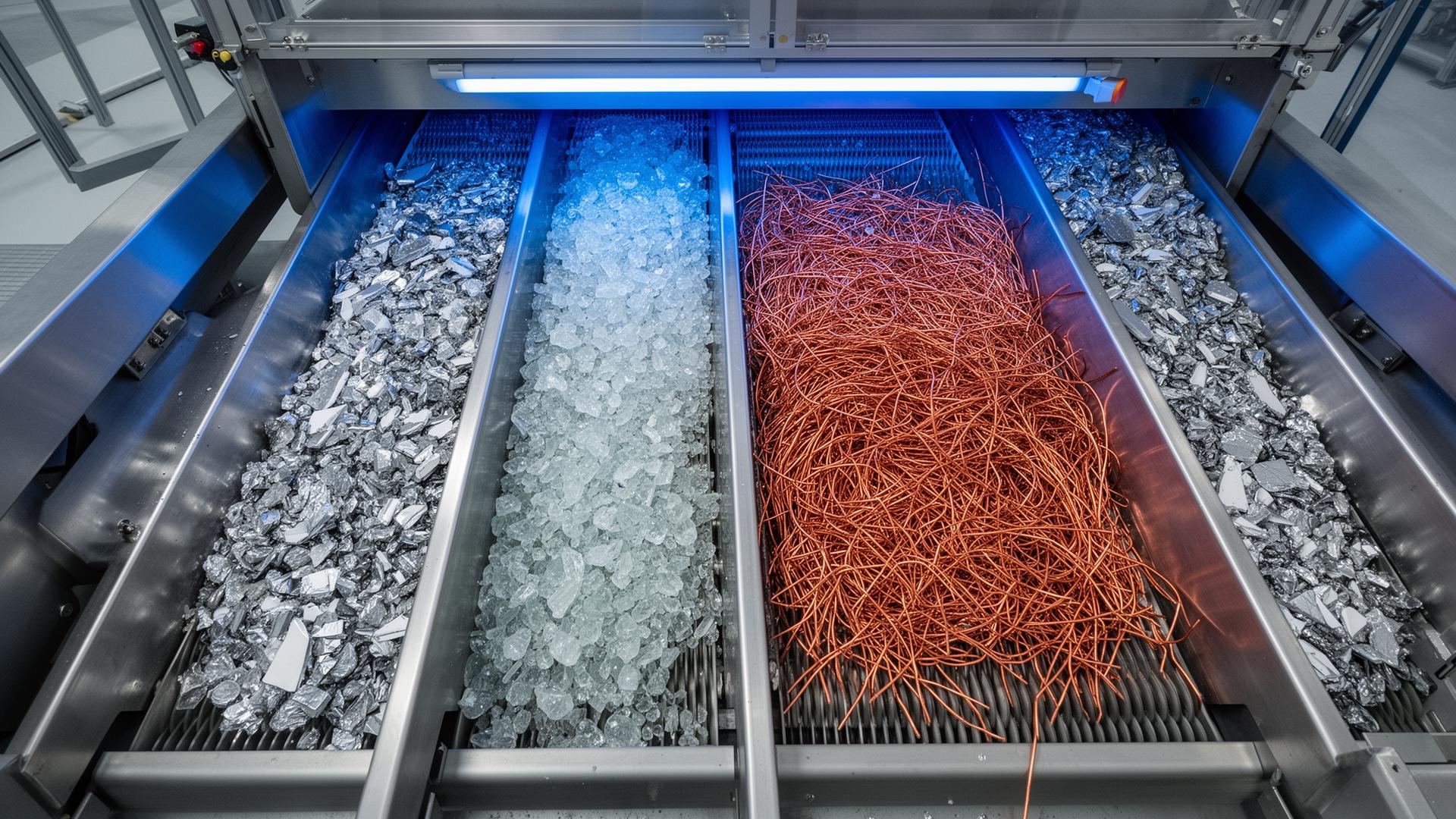
Measured performance. Engineering-grade evidence.
A defined path from research to industrial deployment
Our commercialization pathway treats each module as a product candidate progressing through defined readiness levels — from process feasibility through pilot validation, integrated line operation, and first-of-kind industrial deployment with a partner operator.
- Stage 1 — Process feasibility
- Stage 2 — Sub-system prototyping
- Stage 3 — Integrated pilot validation
- Stage 4 — First-of-kind industrial deployment
- Stage 5 — Scaled commercial operation