An integrated technology stack for industrial solar module recovery
Mechanical separation, robotic dismantling, AI-assisted sorting, and modular material recovery — engineered for industrial scale, instrumented yield, and long-term commercial reliability.
A six-layer technology platform
North Volt Cycle's technology platform is structured around six engineered layers — from the mechanical handling of an end-of-life module to the AI systems that govern its recovery. Each layer is designed as a credible engineering deliverable, validated through staged industrial prototyping rather than presented as a marketing concept.
Mechanical Separation Systems
Recover clean glass, aluminum, and cell-layer fractions through controlled, non-destructive separation.
Our mechanical separation platform is engineered around the physical architecture of crystalline-silicon photovoltaic modules — tempered front glass, EVA encapsulant, silicon cells, ribbon interconnects, and polymer backsheet. Each layer is approached with a dedicated mechanical strategy designed to preserve material quality rather than reduce the module to mixed shred.
Controlled delamination separates the glass-encapsulant interface using engineered shear and surface treatment, allowing >90% recovery target of intact glass cullet suitable for re-introduction into flat-glass or container-glass supply chains. Frame removal and backsheet handling are integrated upstream to prevent contamination of downstream fractions.
Engineering benefits include lower energy intensity than full thermal processing, simpler effluent control, and preservation of material grade for higher-value recovery. The platform is designed for continuous operation under industrial duty cycles, with quick-change tooling for evolving module formats.
Automated Processing & Robotic Handling
Robotic dismantling, vision-guided positioning, and continuous module flow at industrial throughput.
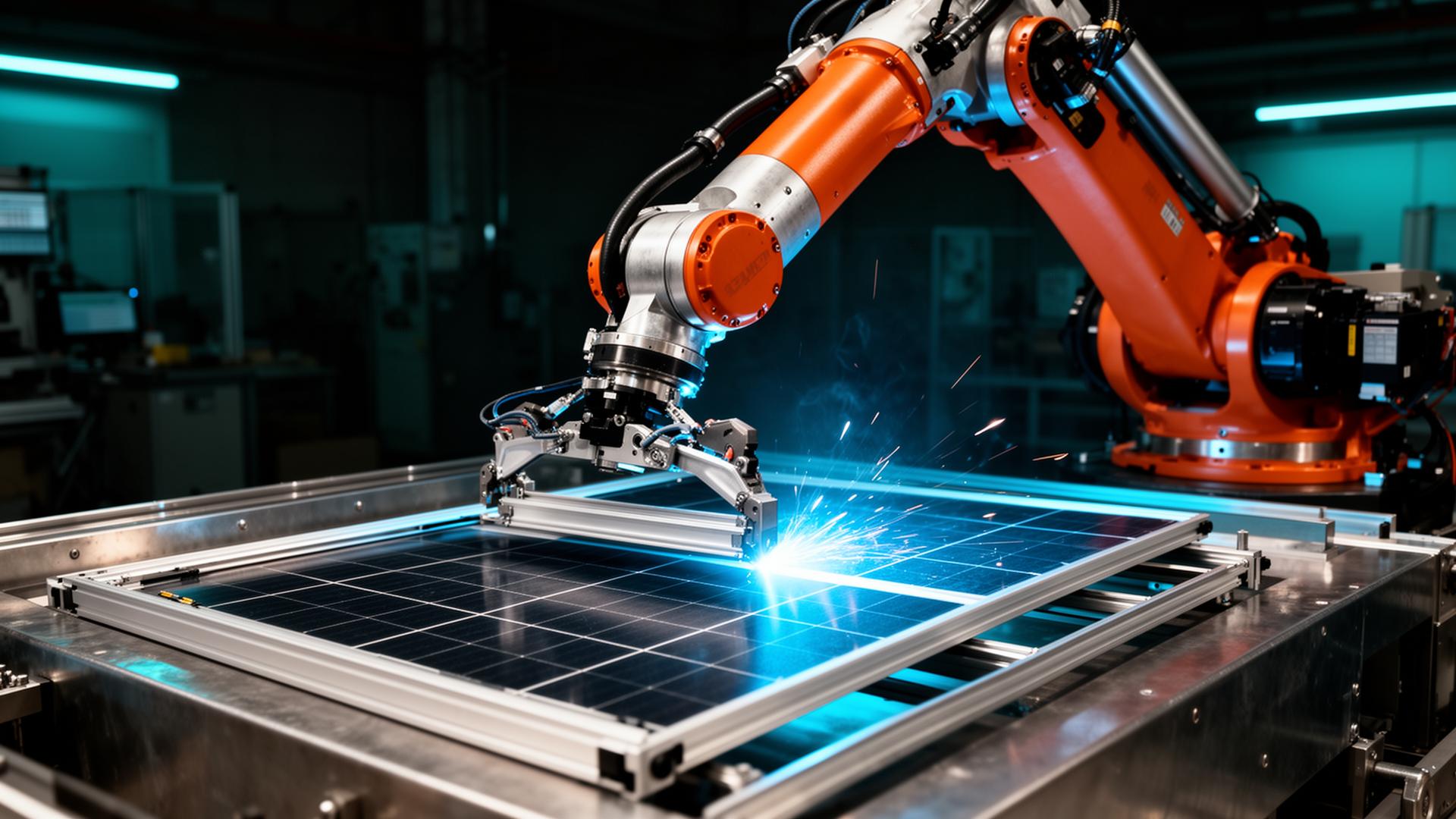
Automated processing cells perform the dismantling steps that historically required manual labour: aluminum frame removal, junction-box extraction, and ribbon-cable separation. Six-axis robotic arms paired with machine-vision systems identify module geometry, locate fasteners and bonded joints, and execute removal sequences with repeatable precision.
Vision-guided positioning compensates for the dimensional variation across module makes, models, and field-aged conditions. AI-assisted classification routes each module to the appropriate processing recipe — first-generation framed crystalline modules, frameless thin-film modules, and glass-glass bifacials are handled on a shared line with module-specific parameters.
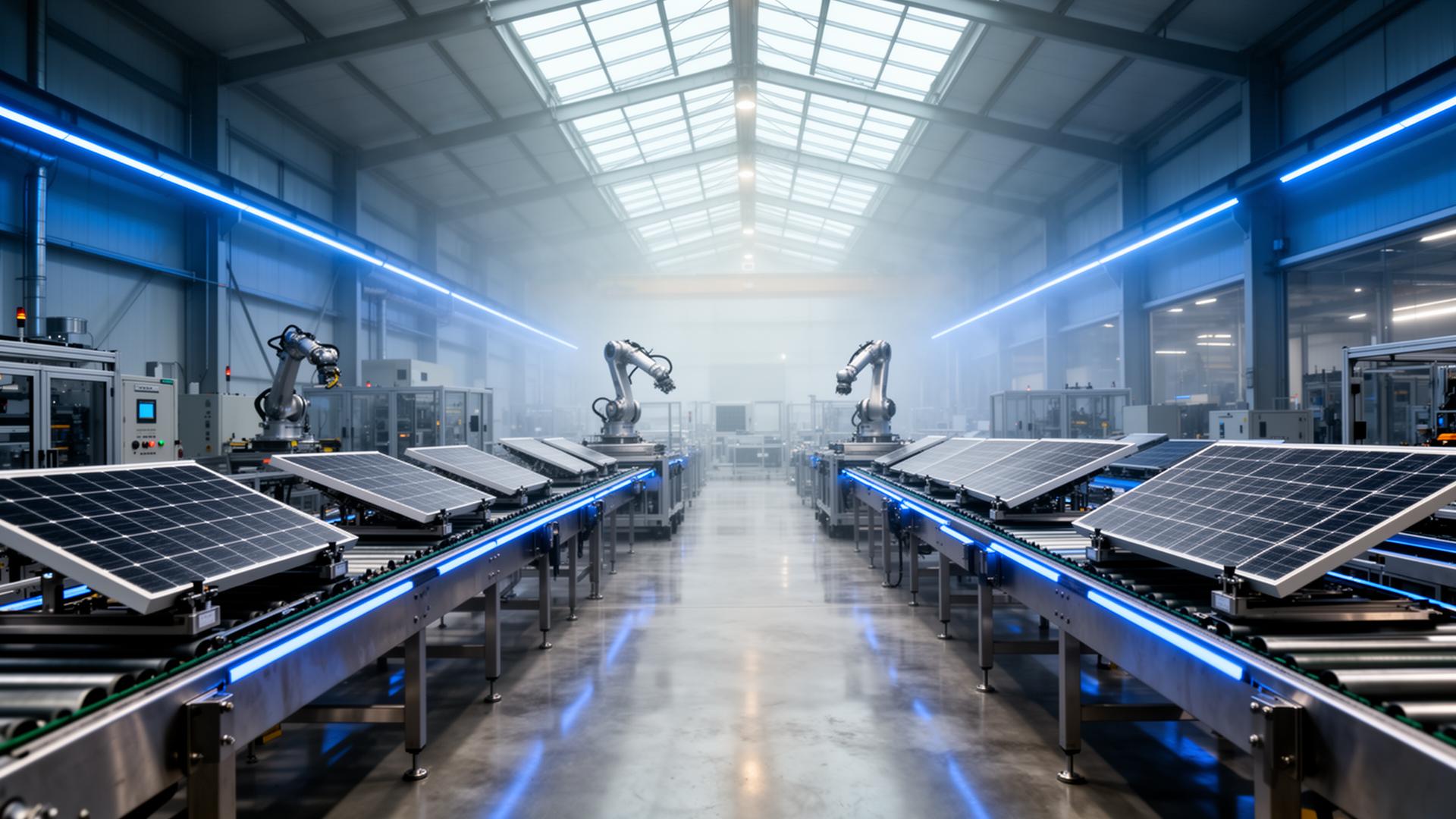
Conveyor integration and instrumented buffering keep the upstream and downstream cells synchronized, supporting continuous flow with engineered redundancy. Industrial safety interlocks, light curtains, and lock-out architecture are designed in from the outset for an industrial process environment.
Material Recovery Platform
High-purity recovery of aluminum, copper, silver, glass, and silicon-bearing material streams.
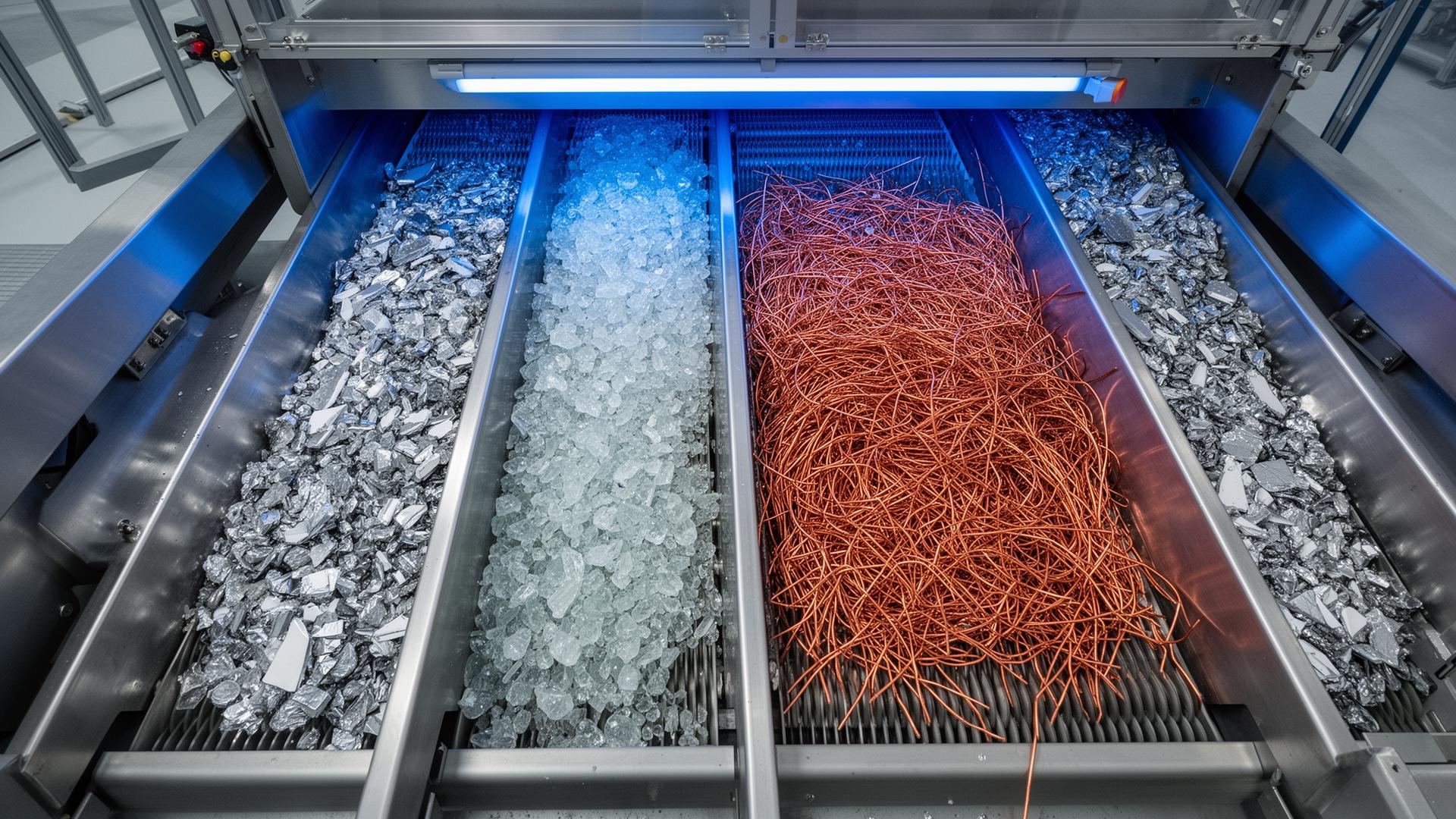
The material recovery platform converts separated module streams into market-grade secondary materials. Aluminum frame profiles are de-burred and baled for direct sale into secondary aluminum smelting. Copper from ribbons, busbars, and junction-box wiring is isolated through mechanical and density-based separation, targeting purity grades suitable for refining.
Silicon-bearing fractions — cells, cell fragments, and silver-bearing busbar residues — are concentrated through multi-stage sorting that combines size classification, density separation, and material-specific separation techniques. The platform is engineered to keep silver and silicon co-located for downstream chemical recovery rather than dispersing them into low-value streams.
Material purity is treated as a primary engineering objective, not an afterthought. Each recovered fraction is designed to meet the contamination thresholds expected by downstream refiners and secondary-material buyers, supporting genuine circular re-use rather than down-cycling.
Modular System Architecture
Configurable industrial lines composed of independent, scalable process modules.
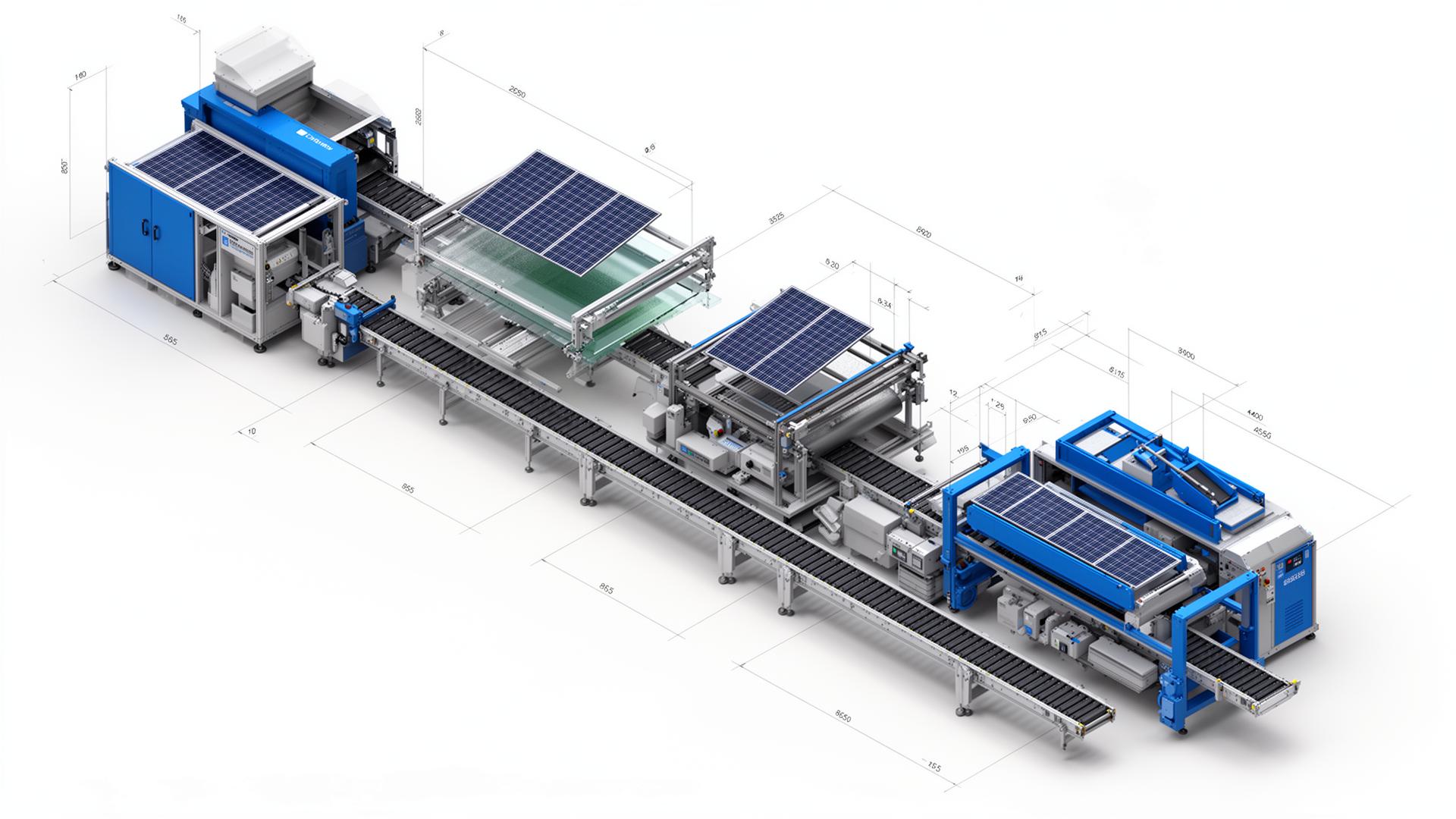
Every sub-system — intake, frame removal, junction-box removal, delamination, sorting, and recovery — is engineered as a self-contained industrial module with defined mechanical, electrical, and control interfaces. Operators can deploy a single module to augment an existing line, or combine modules into a complete, instrumented recycling system.
Modularity enables phased capital deployment: a regional operator can begin with intake and pre-processing, then add recovery modules as volumes mature. Each module shares a common control architecture, safety framework, and instrumentation backbone so capacity expansion does not require re-engineering the line.
Future expansion is part of the architecture, not a retrofit. New module formats, recovery chemistries, and automation cells are designed to slot into the existing mechanical and digital interfaces, protecting capital investment across multiple generations of module technology.
AI-Assisted Process Optimization
Instrumented process control for throughput, recovery yield, energy efficiency, and uptime.
Every process module is instrumented at the sensor level — throughput, torque, vibration, temperature, vision, and material composition signals feed a unified data plane. Real-time analytics close the loop between physical performance and process parameters, supporting continuous optimization of throughput, recovery yield, and energy intensity.
AI-assisted sorting models classify material fractions on the conveyor in real time, adjusting separation parameters and routing logic to maintain purity targets as feedstock composition shifts. Predictive maintenance models analyze drive, actuator, and tooling signals to schedule intervention before unplanned downtime.
Energy and consumables are monitored as first-class process variables, supporting environmental reporting and continuous reduction of the per-tonne energy footprint of module recovery.
Future R&D Roadmap
Next-generation delamination, thermal recovery, and intelligent dismantling for emerging module formats.
Our research roadmap targets the module formats arriving over the next decade: high-efficiency TOPCon and HJT cells, glass-glass bifacials, and emerging thin-film chemistries. Each format introduces specific mechanical, thermal, and material-recovery challenges that benefit from dedicated R&D ahead of commercial volumes.
Active research directions include controlled thermal decomposition of EVA encapsulant under instrumented atmospheric conditions, advanced separation chemistries for silicon and silver concentrates, and intelligent robotic dismantling that adapts in real time to module condition.
We are actively building cross-border research relationships with material-science groups, industrial automation partners, and clean-tech research institutions to accelerate the commercialization pathway for next-generation recovery processes.
Distinct streams. Industrial-grade purity.
How we engineer the platform
Manufacturability
Every process module is designed to be built, commissioned, and serviced in an industrial environment.
Instrumented Yield
Throughput, recovery, and purity are measured continuously — not estimated.
Safety by Design
Mechanical guarding, electrical isolation, and process safety are integrated from the architecture stage.
Upgrade Pathway
Modules are engineered to accept new tooling, sensors, and recovery chemistries over their service life.
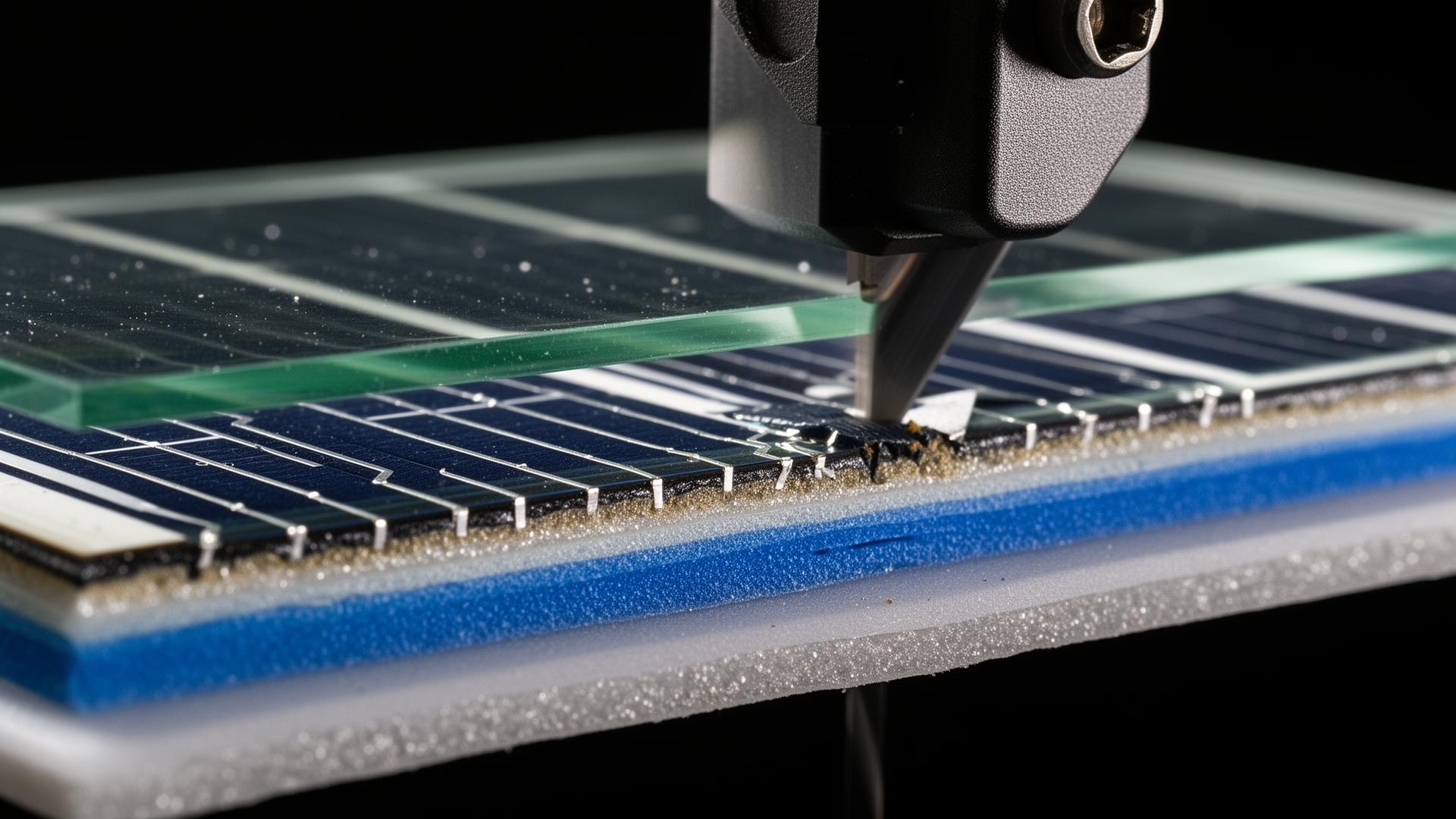
Engineered around the physical reality of the PV module
Our separation processes are designed around the actual layered architecture of the module — tempered glass, EVA encapsulant, silicon cells, ribbon interconnects, and polymer backsheet — preserving the quality of each recovered fraction for downstream re-use.
- Front glass — controlled delamination
- EVA encapsulant — thermal / chemical decomposition pathways
- Silicon cells & ribbon — silicon and silver concentration
- Aluminum frame — clean profile recovery
- Junction box & cable — copper isolation

AI-assisted control across every stage of the line
Controlled decomposition for high-value recovery
For module formats where mechanical separation alone cannot economically liberate the cell layer, our R&D program is developing instrumented thermal decomposition under controlled atmospheric conditions — engineered to liberate silicon and silver-bearing fractions while managing emissions through environmental control systems.
All thermal pathways are designed with off-gas treatment, energy recovery, and continuous emissions monitoring as integrated sub-systems — not external add-ons.